

Have you ever typed something into Google and noticed a few results at the top marked as "Sponsored"? Then you have already seen PPC in action. You probably didn't notice much of it at the time, but for a business owner trying to get noticed online, that "Sponsored" tag is the difference between a customer finding you today or finding your competitor instead.
So let's talk about it. What is PPC Google Ads? Not the textbook definition, the practical one.
What Is PPC?
PPC stands for Pay-Per-Click. It's a form of online advertising where you don't pay for the ad shown but only pay when someone actually clicks on it. No click, no charge. That's the whole idea of ppc marketing.
Example: Think of it like renting a billboard, except you only pay when a driver actually pulls over and walks into your store. That's a pretty good deal compared to traditional advertising, where you pay whether anyone notices your ad or not.
What Is Google Ads?
Google Ads (formerly known as Google AdWords) is the platform where business owners use to run PPC campaigns. Google is the biggest player in this space because it handles billions of searches every single day. When someone searches "plumber near me" or "best running shoes for beginners," there's a good chance a paid ad shows up before they even scroll down to the organic results.
How Does PPC Actually Work?
Many beginners get intimidated, but it's not as complicated as it sounds once you break it down.
- You pick keywords. This is the section where you enter the search terms you want your ad to show up for. If you run a bakery in Kathmandu, you might bid on "birthday cake delivery Kathmandu."
- You set a budget. This section decides how much you're willing to spend per day or per click.
- You write your ad. A short headline, description, and a link to your website or landing page are added.
- Google runs an auction. Every time someone searches a keyword you're bidding on, Google runs a quick, automated auction between all the businesses bidding on that term.
- Your ad shows (or doesn't). Here, the winner isn't the one who pays the most. Google also looks at how relevant and useful your ad is. This combination is what Google calls your "Ad Rank."
- You pay only on clicks. If ads are shown a hundred times but nobody clicks, you are owing nothing. The moment someone clicks, you're charged, depending on your industry, normally a few cents to a few dollars.
Why Business Owners Care About PPC?
You might be wondering if this is really worth the effort, when you're already posting on social media or trying to rank organically on Google. Here's the honest answer: PPC and organic efforts work best together, but PPC gives you organic simply can't speed up.
Ranking on Google takes months, sometimes years, of consistent content and organic SEO work. A PPC campaign, on the other hand, puts your business at the top of search results within hours of hitting "publish."
A few real reasons small and medium businesses lean into Google Ads:
- You control your budget completely. Spend $5 a day or $500 it's entirely up to you.
- You can target very specific audiences. By location, device, time of day, even the type of device someone is browsing from.
- Results are measurable. You'll know exactly how many clicks, calls, or sales came from your ad spend.
- You can pause anytime. There's no long-term commitment.
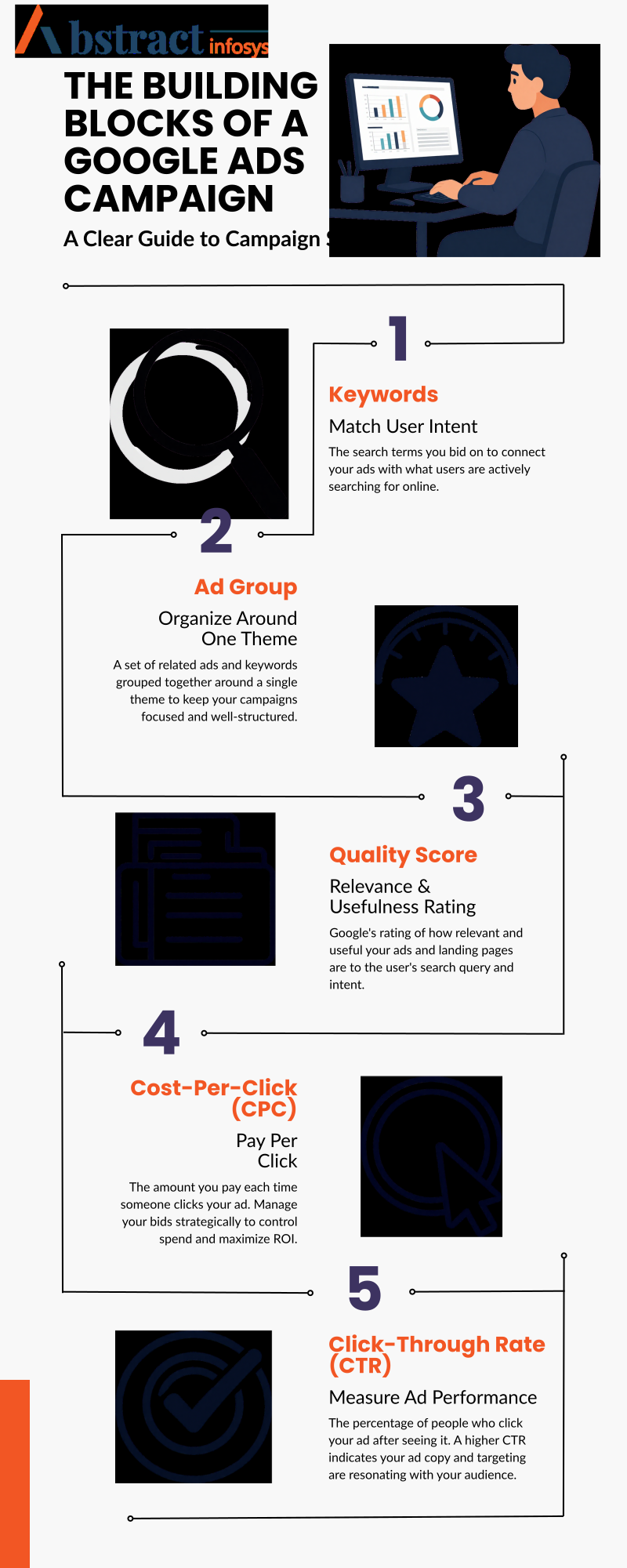
The Building Blocks of a Google Ads Campaign
Before diving in, let's understand a few core terms you'll run into constantly.
Keywords :- It’s the search terms that trigger your ad. Choosing the right keywords is the most important part of any PPC campaign.
Ad Groups:- A way to organize related keywords and ads together, so messaging stays relevant to what people are searching for.
Quality Score:- Google rates how relevant and useful your ads, keywords, and landing page are. A higher score means lower costs and better ad placement.
Cost-Per-Click (CPC):- It explains how much you pay each time someone clicks your ad. This varies a lot depending on competition in your industry.
Click-Through Rate (CTR):- The percentage of people who see your ad and actually click it. A higher CTR usually signals your ad is resonating with the right audience.
Conversion:- It explains the actual goal you want, where it might be a purchase, a form submission, a phone call, or a booking.
Types of Google Ads Campaigns
Google Ads isn't just one thing it a combination of different campaign types depending on what one is trying to achieve.
- Search Ads- It's text ads that appear on Google's search results page. This is the most common starting point for beginners.
- Display Ads- It's a visual banner ads which appear across websites in Google's network.
- Shopping Ads- It's a product listing with images and prices, ideal for e-commerce businesses.
- Video Ads- Ads that are run on YouTube before or during videos.
- App Promotion Ads- Designed to drive mobile app downloads.
Example to Understand the Whole Concept
Let's say you run a small yoga studio. Someone in your city searches "beginner yoga classes near me."
Now let's say you are running a PPC campaign targeting that exact phrase; your ad could appear right at the top, above every organic listing.
That person clicks, lands on a page about your beginner classes, and books a trial session.
Let's say you paid around $0.50 for that click. If that one class booking turns into a paying monthly member, that $0.50 becomes ongoing revenue. That's the entire logic behind PPC advertising.
Common Mistakes Beginners Make
As most business owners hit at least one of these when they're starting out so knowing about them is great for business owners.
- Choosing keywords that are too broad. Bidding on "shoes" instead of "women's running shoes size 8" burns through budget fast with little return.
- Sending traffic to a generic homepage instead of a page that directly matches what the person searched for.
- Ignoring negative keywords:- terms that you don't want to show up for, which helps avoid wasted clicks.
- Setting it and forgetting it. A PPC campaign isn't a one-time setup; it needs regular checking and small adjustments.
- Not tracking conversions. Without this, you're spending money without really knowing what's working.
Is PPC Worth It for a Small Business?
In most cases, small businesses are the ones who should do PPC but also should have a bit of patience for their campaign, as the first campaign may not work perfectly, and that's completely normal. PPC rewards testing: trying different keywords, ad copy, and landing pages until you find what actually brings in customers.
The beauty of PPC advertising is that even a small business with a limited budget can compete right alongside much bigger companies, as you're not paying for size, you're paying for relevance and clicks.
Conclusion
Understanding what is PPC Google Ads, comes down to one simple idea: you're paying to put your business directly in front of people who are already looking for what you offer, and you only pay when they show real interest by clicking. That's a pretty efficient way to spend a marketing budget, especially compared to older forms of advertising where you're paying regardless of results.
If you're a business owner who's been putting off learning this because it feels technical, take it one step at a time. Start with a small budget, a handful of relevant keywords, and a landing page that matches what people are searching for. You'll learn more from your first live campaign than from a dozen articles.